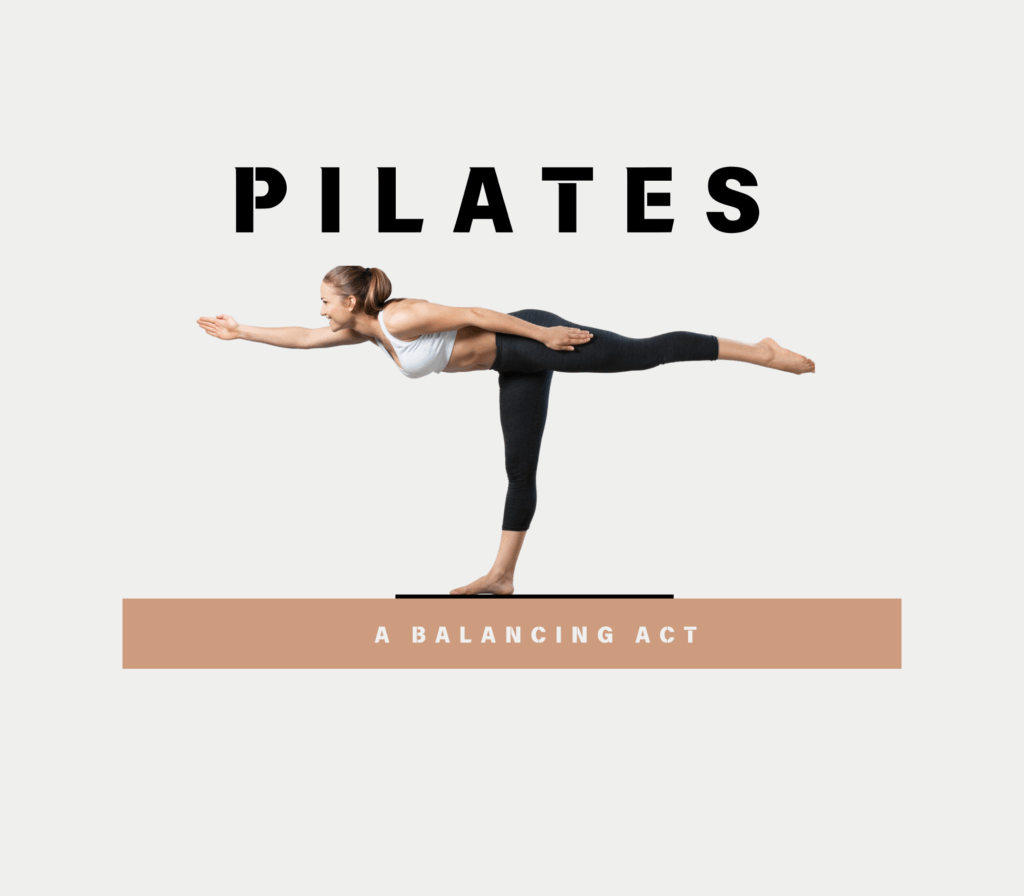
Have you ever watched someone paddleboard, dance, ice skate, walk a balance beam, ride a scooter, or work on a construction site? All of these activities require strong, proper balance mechanics – without them, people fall.
Falls happen for many reasons: aging, impaired gait, environmental hazards, improper footwear, pets underfoot, and more. The good news? The Pilates method is one of the most effective ways to improve balance and reduce fall risk.
A BRIEF ANATOMY LESSON
The Core
The core (or trunk muscles) stabilizes the spine and pelvis, allowing for efficient force transfer during movement. These muscles include:
Abdominals (from superficial to deep):
- Rectus abdominis (the “six-pack”)
- External obliques
- Internal obliques
- Transverse abdominis (the deepest and most stabilizing)
Paraspinal muscles:
These support the spine from the back side of the body, including familiar muscles like the lats, rhomboids, and trapezius. One especially important stabilizer is the multifidus, which attaches along the ENTIRE spinal column like scaffolding, helping stabilize your spine as you move and even while sitting.
The Power of the Glutes
- Gluteus medius: Stabilizes the pelvis, especially when standing on one leg
- Gluteus maximus: Generates force and supports pelvic stability during movement
Lower Body Stability
- Quadriceps: Extend the knee and control impact
- Hamstrings: Extend the hip and assist with forward motion
- Shins (Anterior Tibialis): Help control foot placement and balance during walking/running
- Calves: Provide push-off for smooth heel-ball-toe movement
All of these muscles activate during activities that require quick changes in direction — exactly when balance matters most.
WHY PILATES WORKS
The Pilates method systematically strengthens all of these muscle groups through:
control, centering, concentration, precision, alignment, lengthening, stamina, coordination, and breathing.
My favorite saying: “If you teach the body physiologically correctly, the aesthetics will follow.”
The principles of Pilates do exactly that — building strength and balance from the inside out.