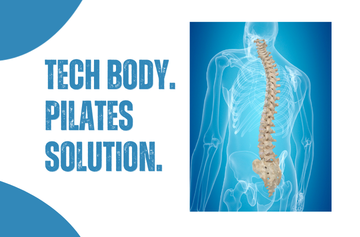
Our modern lifestyle is changing the way we stand, move, and age.
Hours spent looking down at phones, working at computers, driving, and sitting for long periods can contribute to a posture pattern known as kyphosis—an excessive forward rounding of the upper back (thoracic spine). Often referred to as a “rounded back” or “hunchback,” kyphosis can gradually affect both appearance and function.
What Causes Kyphosis?
Several factors can contribute to an increased curvature of the thoracic spine:
- Poor postural habits and prolonged slouching
- Structural abnormalities, such as wedge-shaped vertebrae
- Age-related changes, including spinal compression fractures
- Genetic factors and inherited spinal conditions
- Weakness in the muscles that support the spine
According to research cited by the Cleveland Clinic, severe forms of kyphosis affect approximately 20% to 40% of adults over age 60. The angle of the thoracic spine tends to increase by about three degrees per decade, and poor posture combined with muscular weakness can accelerate the process.
Common Signs and Symptoms
Kyphosis often develops gradually, making it easy to overlook in its early stages. Common signs include:
- Rounded shoulders
- Forward head posture
- A noticeable curve or “hump” in the upper back
- Neck and shoulder tension
- Reduced spinal mobility
- Tight hamstrings
Many people are surprised to learn that hamstring tightness is frequently associated with postural changes throughout the entire spine.
Daily Habits Shape Your Spine
Your posture is influenced by what you do every day.
A report from Harvard Health Publishing examined how lifestyle, aging, and bone health interact to contribute to increased spinal curvature. The encouraging news is that understanding these factors allows us to slow, and sometimes reverse, many of the movement patterns that drive the curve forward.
Muscles, tendons, and ligaments all play a critical role in supporting spinal alignment. When these structures become weak or imbalanced, maintaining an upright posture becomes increasingly difficult.
Why Pilates Works
Joseph Pilates built his method around one remarkable structure: the spine.
Nearly every exercise in the Pilates repertoire is designed to improve spinal mobility, stability, alignment, and strength. Rather than treating posture as a cosmetic issue, Pilates addresses the movement patterns and muscular imbalances that contribute to poor alignment.
One of the first tools we use is breath.
Breathing for Better Posture
Breathing influences spinal movement more than most people realize. Pilates emphasizes three-dimensional breathing, whether seated, standing, or lying down.
A gentle inhalation encourages spinal extension and expansion, while the exhalation supports controlled abdominal engagement and spinal organization. These breathing patterns help restore awareness of posture and improve movement efficiency throughout the body.
Pilates Equipment for Kyphosis
The Pilates apparatus offers valuable support for individuals with rounded posture patterns.
The Spine Corrector and Barrels
The barrels are among the most effective pieces of equipment for clients with excessive thoracic kyphosis. Exercises such as Breaststroke Prep and Swimming Prep encourage extension through the upper back while strengthening the muscles responsible for maintaining an upright posture.
Many individuals with hyperkyphosis also demonstrate excessive mobility in the thoracolumbar junction. In these cases, exercises must be carefully selected to encourage stability rather than simply increasing flexibility.
Reformer Exercises
The Reformer provides excellent opportunities to strengthen postural muscles while improving spinal awareness. Effective exercises may include:
- Mermaid
- Mid-Back Series
- Seated Box Work
- Front and Back Rowing
- Seated Spinal Rotation
- Knee Stretches with a Flat Back
These exercises challenge the body to maintain proper alignment while integrating strength, mobility, and coordination.
Strengthening the Posterior Chain
Restoring posture requires more than stretching.
A key component of any successful program is strengthening the posterior chain—the interconnected system of muscles running from the base of the skull through the back, glutes, hamstrings, and calves.
These muscles work together to keep us upright against gravity.
When the posterior chain is weak, the body naturally collapses forward. When it is strong and coordinated, the spine is better supported and posture improves naturally.
Pilates trains the abdominals and back muscles to work together in balanced movement patterns while simultaneously strengthening the muscles that support spinal extension.
Small Changes Create Lasting Results
Improving posture is not about standing up straighter for a few minutes. It is about creating better movement habits throughout the day.
The most effective strategy combines:
- Regular posture resets
- Awareness of daily habits that reinforce forward rounding
- Strengthening of the posterior chain
- Improved breathing mechanics
- Consistent Pilates practice
By addressing the root causes of spinal rounding rather than simply treating the symptoms, Pilates provides a powerful approach to maintaining spinal health, improving alignment, and helping the body move the way it was designed to move.
As Joseph Pilates understood, a healthy spine is the foundation of a healthy body.